Designed for:
Fossil
Platform:
Salesforce Commerce Cloud (SFCC)
Tools Used:
Adobe Photoshop, Figma
The Ask
- Fossil wanted to stand up a blog to help drive search engine traffic to the website.
- They wanted it simplistic; with minimal bells and whistles. Just a basic blog.
- It should look similar to the existing Collector’s Club landing page.
- It would be updated manually by the content team.
- For launch in January 2026
- Since no one really knew anything about blogs, this was my project start to finish:
- Planning
- Design
- Stakeholder Approvals
- Development Planning & Management
- Handoff to the Content Team who would take it from there
My Initial Process
- Having developed and designed for WordPress for many years, I knew this meant:
- A blog hub or homepage
- Article page
- No author needed
- Post date
- Category
- Navigation between articles and categories.
- Stakeholders initially said “no navigation” for MVP, which did not make sense. I successfully argued against this.
- No comments would be allowed, so no need for a comment section
- A blog archive (later scrapped in favor of text at the bottom of the hub page)
- Since Fossil’s customers are predominantly on mobile (between 58% – 80% depending), that always means a mobile-first design.
- However, Fossil is also working on a new headless site, which meant that any work done would likely need to be repeated.
Initial FigJam Board
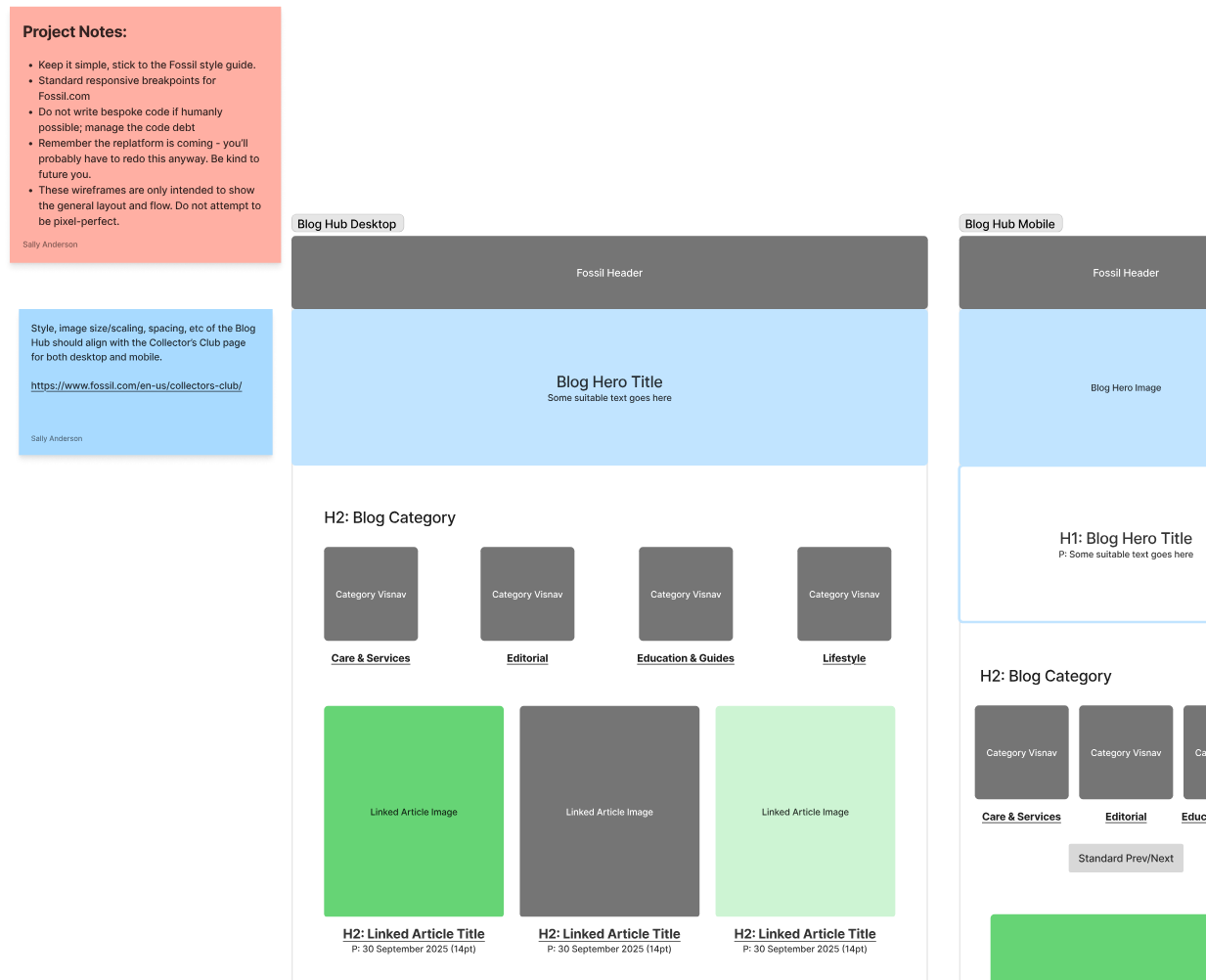
Since my stakeholders are very visual people, I laid out my idea in FigJam to begin. I opted to use text instead of grey boxes to assure understanding of intent. This is a very low-fidelity start, more meant to give the team an idea of where everything would go with some select annotations.
Medium-Fidelity Wireframes
Since they liked the initial layout and the developers saw no issue building it out, we moved on to the next level of fidelity.
Medium fidelity wireframes in PDF format:
- Blog Hub Desktop
- Blog Category Desktop
- Blog Page Desktop
- Blog Hub Mobile
- Blog Category Mobile
- Blog Page Mobile
I like to design with the max-state in mind, so everything has far more content than the average planned blog post. This assures proper fit and flow, even if translated into languages with more verbose words and phrases.
There wasn’t much of an approval process. Just a Google Chat with the chief stakeholder, who enthusiastically urged me to move forward. 🥳
Since the final content wouldn’t be ready to go until closer to January 2026, I directed my developers to begin building out the basic layout.
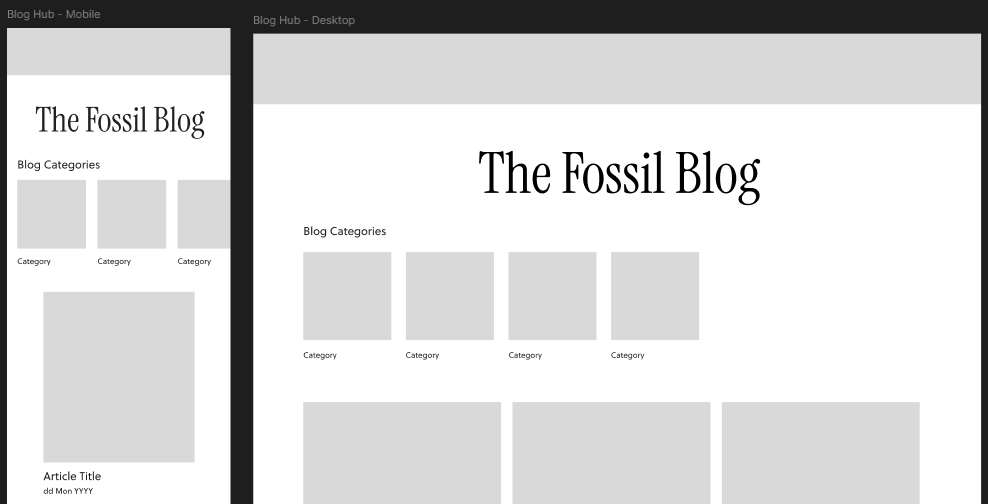
Final layout pending official content:
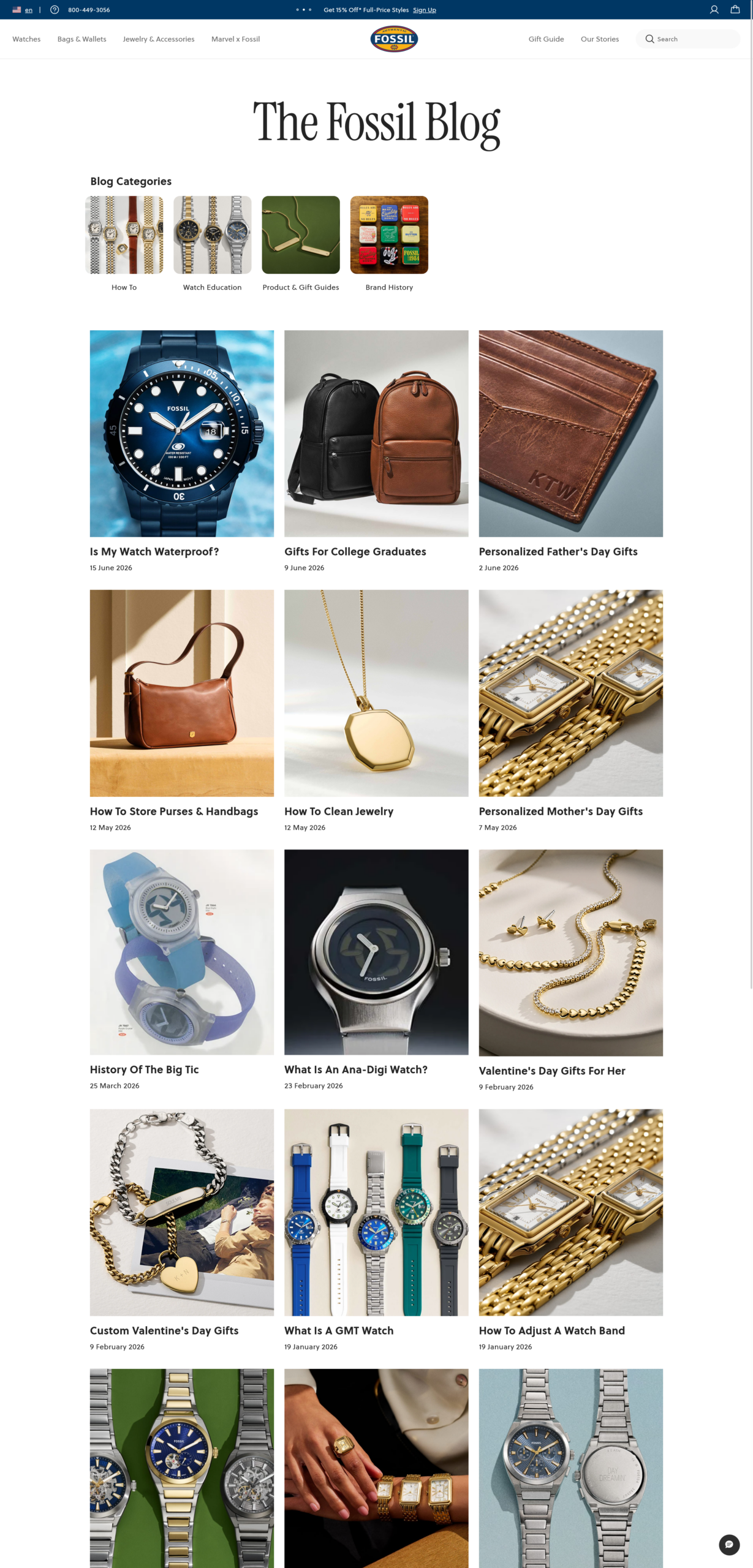
Live, Finished Product
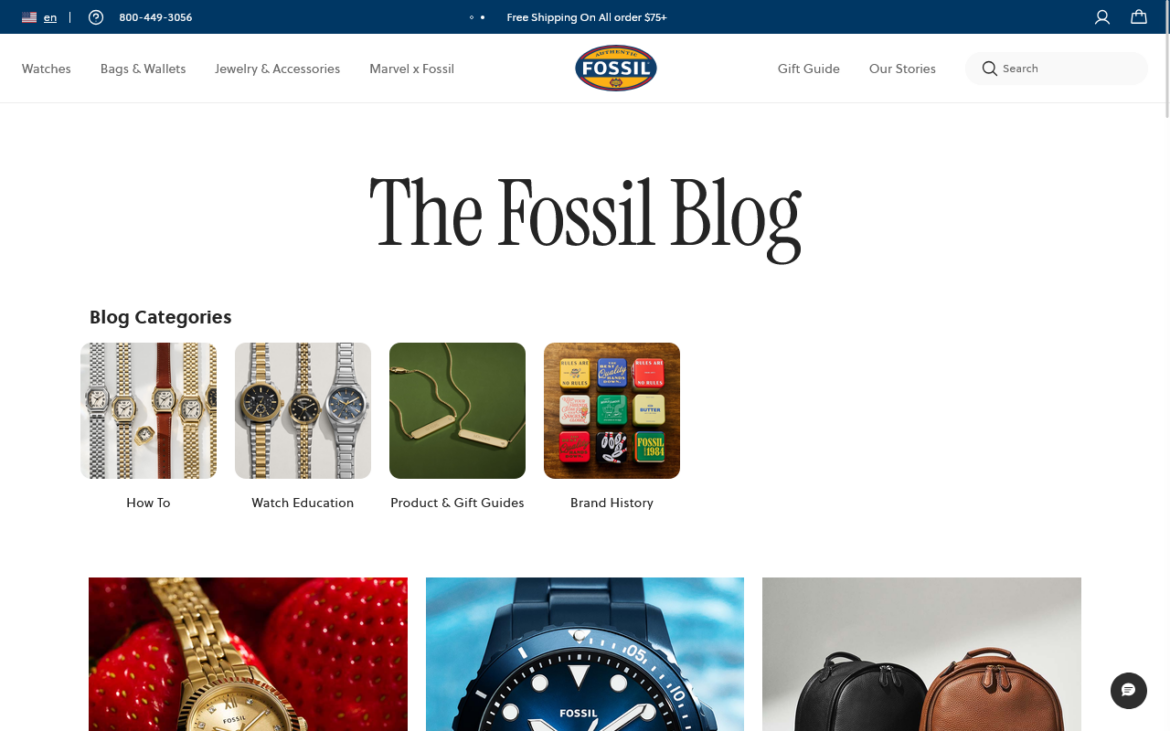
The Fossil Blog went live on schedule and has been receiving periodic updates.
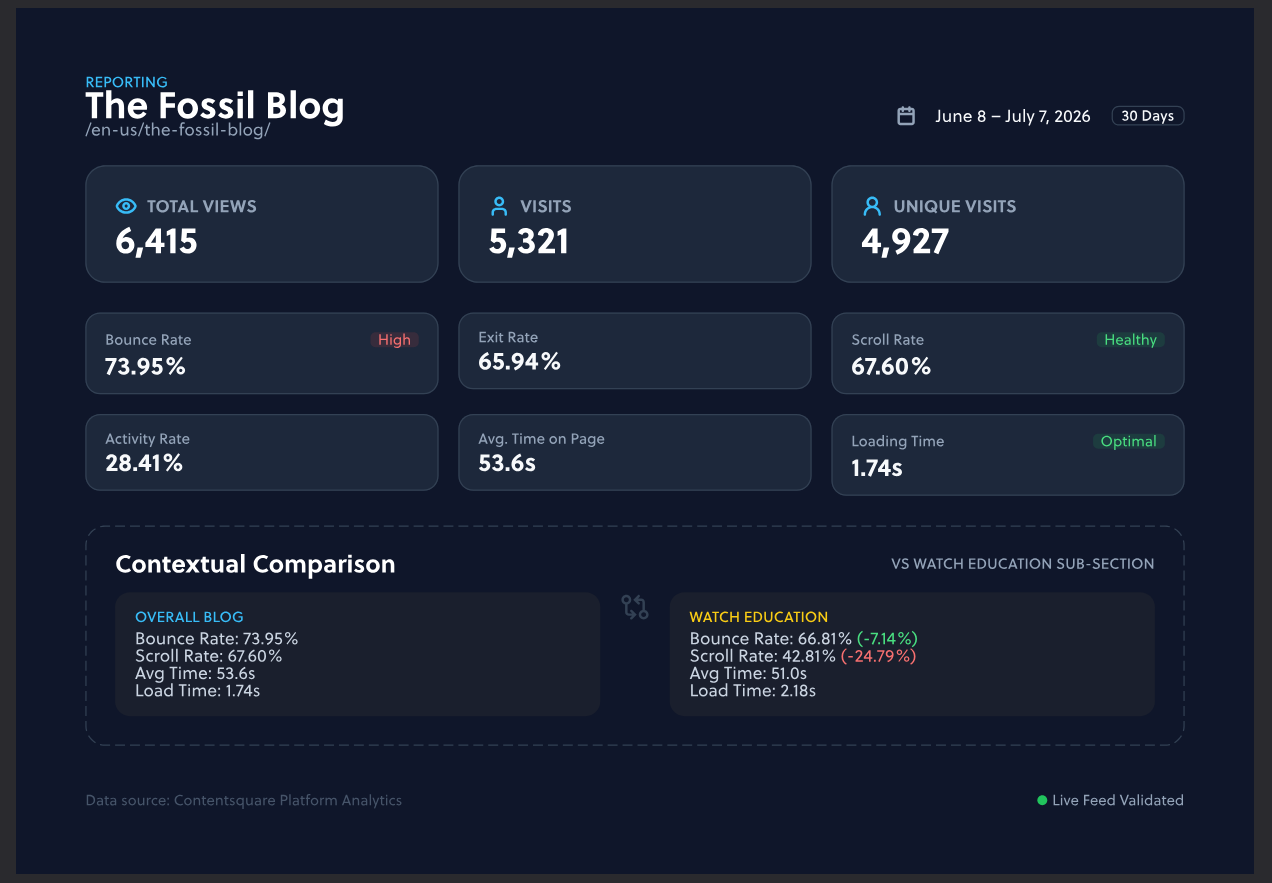
Blog Metrics
Metrics taken June 8th – July 7th, 2026